Few noir plots are as coldly logical as insurance murder. Unlike inheritance killings, which require wealth, insurance turns death into an accessible commodity. It democratizes murder. Movie gangsters who kill often say it’s strictly business, nothing personal. But with insurance fraudsters, it’s typically a family affair, and it’s always deeply personal.
Here are some noirs about murder, cold cash and just deserts:
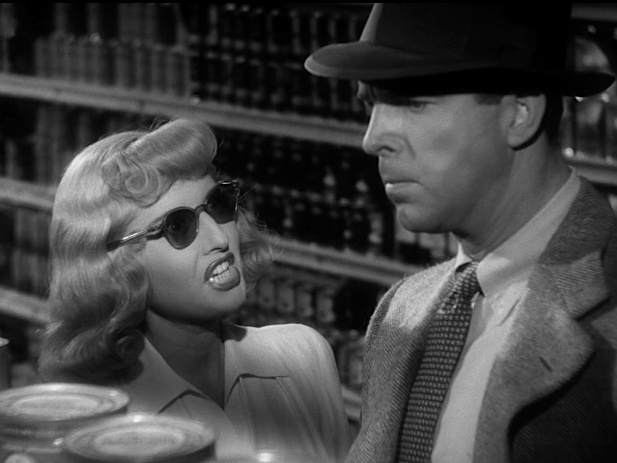
You can’t discuss insurance fraud and movies in the same breath without mentioning “Double Indemnity” (1944), likely the first noir to take on the insurance game in fine detail.
Insurance man Walter Neff (Fred MacMurray) meets Phyllis Dietrichson (Barbara Stanwyck), and they plot to kill Phyllis’s husband for his accident insurance loot.
The murder is as carefully calculated as an actuarial table, a prediction tool that helps insurers put a price on a pound of flesh. Walter’s intimate knowledge of insurance policies and procedures makes him just the man for the job. But problems arise after the deed is done. They’re stuck with one another on a torturous journey ahead — straight down the line.
Movie gangsters who kill often say it’s strictly business, nothing personal.
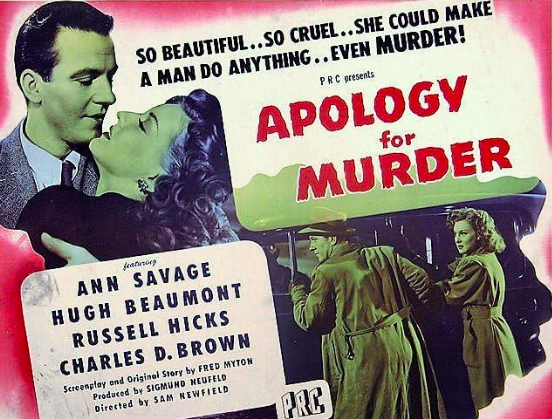
Poverty Row movies, those low budget features produced in back-alley studios, use a different approach to the insurance crime film. Instead of the crisp, industry insider feel of “Double Indemnity,” their films focus on desperate people, grasping for a monetary life raft and barely understanding the policies they want to exploit.
PRC’s “Apology for Murder” (1945), originally titled “Single Indemnity,” is a weak, unabashed attempt to ride the coattails of “Double Indemnity.” This time it’s a news reporter who meets the femme fatale. It’s almost a beat by beat remake of Billy Wilder’s genre defining hit. Ann Savage all but recreates her role as feral hitchhiker Vera from “Detour” (1945), but this time she’s a suburban predator. Hugh Beaumont is the ink stained wretch. Advertisements used the tagline, “Ripped from insurance files,” in an attempt to evoke procedural authority. “Double Indemnity” was based loosely on a true story. But this me-too picture’s claim to true crime authenticity is little more than audacious B-movie puffery.
There are any number of ways things can go wrong, and often they do.
Making one’s own suicide look like murder is another gateway to an insurance swindle, at an admittedly high price. In RKO’s “Strange Bargain” (1949), a bookkeeper (Jeffrey Lynn) reluctantly helps his boss with just such a scam. The problem is, there are any number of ways things can go wrong, and the wheels on this runaway train are guaranteed to come flying off.
Then, there are the films that flip the script and take an insurance investigator’s point of view. Insurance shamuses typically try to retrieve funds paid out on fraudulent claims. With the insurance investigator cast as the hero of the story, his humanitarian side often shines brightly. He values justice over recovered funds, a characteristic usually lacking in the inevitable bean counter boss, who simply wants to cut the company’s losses and put a lid on the case.
“Insurance Investigator” (1951), a Republic programmer, focuses on a company co-owner who kills his heavily insured business partner. Corporate greed and vice are the motivating forces here. Like other insurance scams in noir, this one begins with someone who overestimates his own intellectual powers and underestimate the abilities of a determined investigators who has seen it all before.
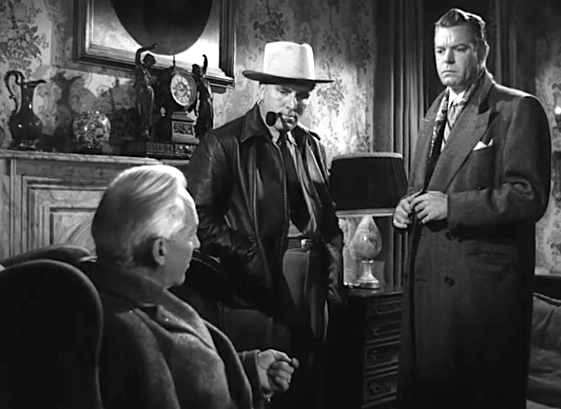
The dark underbelly of a seemingly Idyllic small town shows itself when insurance investigator Sam Donovan (Dennis O’Keefe) arrives, in “Cover Up” (1949). His probe into the apparent suicide death of a local curmudgeon hits a brick wall because the locals aren’t talking. Even the town’s sheriff (William Bendix) wants no part of the investigation. The victim’s niece (Virginia Christine), the beneficiary of the deceased’s life insurance policy, stays mum despite the policy’s double-indemnity payout for murder. It’s all a study of bitter resentments, suppression of the truth and the lengths an entire town will go to hide its secrets. Ironically, the story unfolds over the Christmas season.
The title “Pitfall” (1948) sounds a bit like “pratfall,” which is what married, middle-aged insurance adjuster Johnny Forbes (Dick Powell) takes when he gets mixed up with an embezzler’s lady friend (Lizabeth Scott). André de Toth’s vision of the simmering boredom of post-war middle class life takes shape with a man in search of adventure who finds the kind of excitement no one wants. Adding to his discomfort is a corrupt private detective (Raymond Burr) who squelches Forbes’s attempt to put his unpleasant affair behind him. Suddenly, the suburbs don’t seem so dull after all.
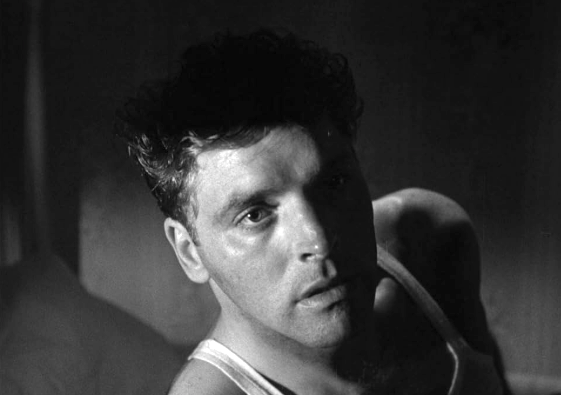
“The Killers” (1946), Robert Siodmak’s opus, loosely based on an Ernest Hemingway short story, is the tale of a washed-up prize fighter (Burt Lancaster), a femme fatale (Ava Gardner), and an insurance company investigator (Edmund O’Brien). The boxer is murdered and the investigator goes on an obsessive journey to get to the bottom of it. Questions haunt him: Why didn’t the boxer flee from the hitmen who’d come to kill him, and why did he make a woman he barely knew the beneficiary of his life insurance policy? He interviews friends and associates of the deceased, and their stories are told in flashback, giving us a fragmented version of the events leading up to the killing. The pieced-together narrative puts us on an even footing with the investigator. We learn new information about the case only when he does, as he fits together the chunks of this perplexing mystery. It’s a journey on which we’re glad to tag along.
These tales of the disenchanted, who believe that a cash infusion will turn their lives around, echo the materialistic, self-centered ethos of a society that’s lost it bearings. By the time they discover the raw truth, that their ill-gotten pot of gold leads to ruin rather than salvation, it’s too late to turn around. Fate will take its course and the future looks dark.
— Paul Parcellin