crimeonfilm.com
-
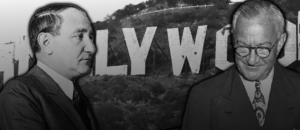
‘Moguls’: How the Schenck Brothers Helped Invent Hollywood While Building an Empire of Their Own
Book Review: ‘Moguls’ (2024), by Michael Benson and Craig Singer, Citadel Press The Schenck brothers, Joseph and Nicholas, stood among the most powerful executives of the 20th Century’s movie industry and played a key role in shaping the Hollywood that we know today. Yet their names are hardly hardly household words. With their engrossing new…
-
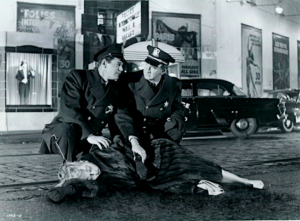
Disenchantment reigns supreme in a ‘City that Never Sleeps’
Marie Windsor, Gig Young, Chill Wills, “City That Never Sleeps” (1953). A cloud of failure hangs over a handful of Chicagoans whose dreary lives are about to become a lot more dramatic. In “City That Never Sleeps” a would-be ballerina, reduced to dancing in a burlesque house; an out of work actor, his face painted…
-
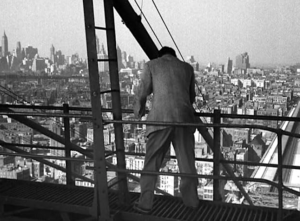
When Noir Got Into the True Crime Game — Docudramas: How True Were They?
Ted de Corsia, “The Naked City” (1948) — just one of the 8 million stories. By Paul Parcellin Maybe it was the rigors of World War II that whet the public’s appetite for true crime stories in the 1940s. Returning soldiers, who saw real blood and guts on the battlefield, were less than inspired by…
-
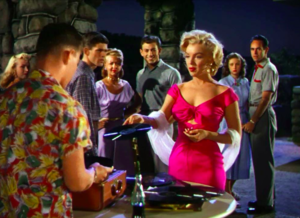
Noir Must Be Shot in Black and White, Right? Guess Again
Marilyn Monroe, “Niagara” (1953). Raw Emotions Sizzle When Noir is in Color By Paul Parcellin I can already hear the howls of protest over the idea that film noir can be in color, so those who insist that color is verboten in noir will probably want to sit this one out. We all know that…
-
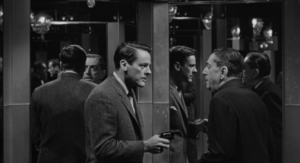
Feverish dreams, persecution fantasies: there’s something about Cornell Woolrich’s stories that pulls us in like a magnet
Kevin McCarthy, Gage Clarke, “Nightmare” (1956). Contains spoilers By Paul Parcellin When it comes to crafting stories of dread and entrapment, Cornell Woolrich stands out among his peers. His darkest work seethes with feverish, paranoid fantasies. Wrongly accused men, caged on death row or free and living under a stifling cloud of suspicion, are driven…
-
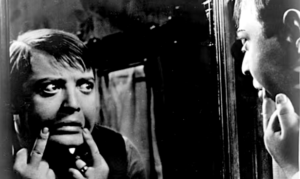
Peter Lorre: His first starring role was a massive hit and one of the most influential works of art in the history of film — and that was the problem
Peter Lorre, “M” (1931). An unforgettable psychological portrait. By Paul Parcellin Renowned character actor Peter Lorre created many indelible roles in groundbreaking noirs, thrillers and films of other genres while achieving greatness in Hollywood. Since June 26th marks the 120th anniversary of his birth, this is a good time to look back at some of…
-
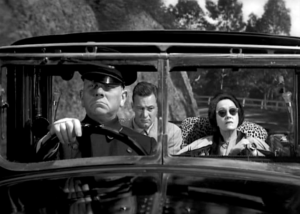
Scrapped: The Original Opening Sequence of “Sunset Boulevard” was Even Stranger than the Final Cut, and Audiences had a Peculiar Reaction to It
Erich von Stroheim, William Holden, Gloria Swanson,“Sunset Boulevard” (1950). Preview audiences were left stunned, oddly amused and utterly confused Joe Gillis (Holden), a life cut short. By Paul Parcellin At the start of “Sunset Boulevard,” hapless screenwriter Joe Gillis (William Holden) floats face-down in a swimming pool with several bullet holes punched into…
-
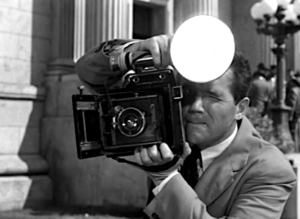
Pop! Goes the Flashbulb: In Noir, Photographers Did It the Old Fashioned Way, and their Pictures Usually Turned the Town, and Crime Investigations, Upside Down
Howard Duff snaps a candid shot in “Shakedown” (1950). Contains Spoilers By Paul Parcellin Lighting and photographic style play an outsized role in crime dramas of all kinds, including film noir. But then there are the noirs and thrillers that put a camera in front of the camera — or to be more precise, they’re…
-
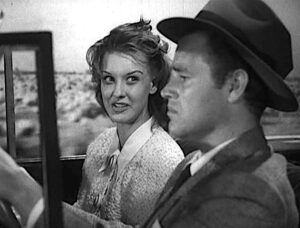
Kings of the Road: Alienated, Disenchanted Drifters May Think They’re Heading Toward their Destination, but They’re Really on Course to a Tragic End
Ann Savage, Tom Neal, “Detour” (1945). Contains Spoilers By Paul Parcellin Film noir is full of cheap hotel rooms, train stations, roadside diners, filling stations, bus depots — places that transients inhabit while on their way somewhere, or perhaps rambling toward nowhere in particular. A compulsive desire to take to the highways is part of…
-
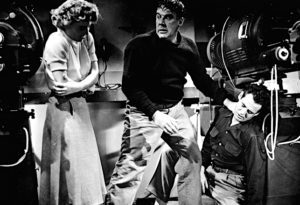
Is It or Isn’t It? “Clash by Night” is a Gripping Drama, Alright, But Some Insist It Doesn’t Make the Cut as an Authentic Noir Because It Lacks One Crucial Element
Barbara Stanwyck, Paul Douglas, Robert Ryan, “Clash by Night” (1952). Contains Spoilers By Paul Parcellin “Clash by Night” has the look and feel of noir, but not everyone thinks of it that way. It stars Barbara Stanwyck and Robert Ryan, two giants of the shadowy crime dramas of the 1940s and ‘50s that define those…