crimeonfilm.com

-
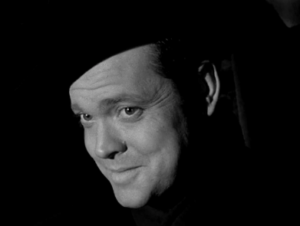
Crime tourists, Part I: Yanks behaving badly in foreign lands
Orson Welles, ‘The Third Man’ (1949). By Paul Parcellin Film noir loves morally sketchy locales — the kind of places where law and order is on life support and police can be manipulated like a vending machine. Like America’s Wild West, post-war Europe and Asia’s rubble strewn roadways were a magnet for drifters, bootleggers, grifters…
-
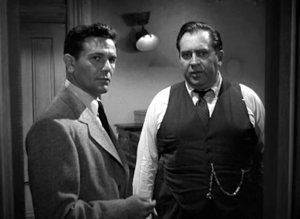
New York noir: 20 films that explore the big city’s dark corners
John Garfield, Thomas Gomez, ‘Force of Evil’ (1948). It might not come as news to you that noirs set in New York City look a lot different from the ones taking place in Los Angeles. The City of Angels is a sun bleached sprawl of low buildings between the ocean and desert. New York is…
-
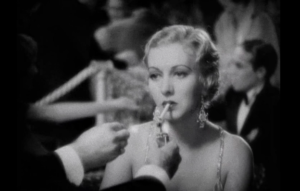
Live it up! 11 essential nightclubs of noir
Karen Morley, ‘Scarface’ (1932) In noir, nightclubs are smokey hideaways where criminality thrives under moody lighting. Ritzier than typical barrooms, they are havens for hedonists and the racketeer elite. Crucial to these nightspots are floorshows. A chanteuse may whisper a torch song designed to torment an ex-lover sitting ringside. Her words spell out jagged details…
-
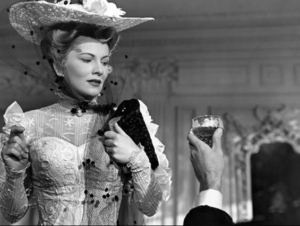
‘Ivy’ is pure evil under shimmering gaslight
Contains spoilers “Ivy” (1947) Even before the action begins we sense that something is rotten in Edwardian London. During the opening credits the orchestral music turns dark and a vase morphs into the faint image of a human skull. Clearly, this is going to be a horror show. Ivy Lexton (Joan Fontaine) seems pleasant enough,…
-
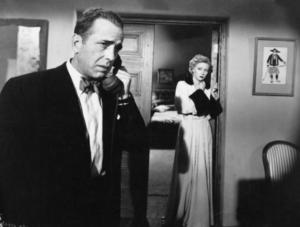
Burn, Hollywood, burn! Four noirs reveal the horrors of the screenwriting trade
Humphrey Bogart, Gloria Grahame, ‘In a Lonely Place’ (1950). You’ve probably heard that screenwriters get little respect in the big town, and by many accounts that’s true. They labor in isolation, punching out fresh ideas, pouring their deepest emotions onto their pages only to have their hearts broken. Their masterpieces are rewritten by faceless studio…
-
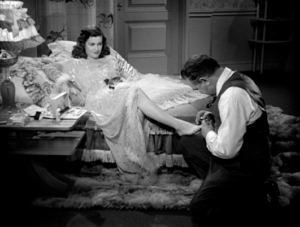
‘Scarlet Street’ at 80: Flirtations with a femme fatale can often lead to trouble — and sometimes murder
At her service. Joan Bennett, Edward G. Robinson, ‘Scarlet Street’ (1945). Contains spoilers When “Scarlet Street” premiered 80 years ago this month it was not uniformly praised by critics, and several cities outright banned it due to its dark content. The film hinted at such taboo topics as sex out of wedlock and prostitution, and…
-
A cunning serial killer is on the loose and police are baffled
Song Kang-ho, ‘Memories of Murder’ (2003).Searching for clues and coming up empty. ‘Memories of Murder’ (2003) Bodies are popping up with terrifying regularity in a small South Korean city and the local police force has few clues to go on. Young women are being raped and strangled, their bodies abandoned in little traveled spots, and…
-
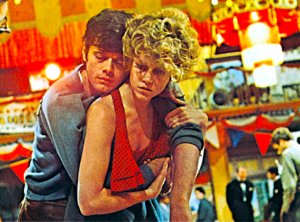
‘They Shoot Horses, Don’t They?’: A Tinseltown Allegory that Ends Unhappily Ever After
Michael Sarrazin, Jane Fonda, ‘They Shoot Horses, Don’t They?’ Harrowing Tale of Dance Marathons and the Depression-Era Downtrodden. But Those Marathons Remind Us of Something Else — the Studio System at its Most Heartless Contains spoilers By Paul Parcellin “They Shoot Horses, Don’t They” is a noir tragedy about exploitation of the desperate and beleaguered…
-
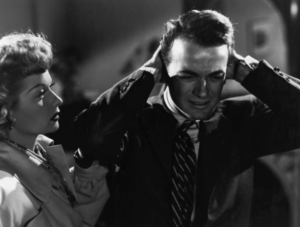
Mark Stevens: his quartet of searing films noir still light up screens today
Lucille Ball, Mark Stevens, ‘The Dark Corner’ (1946). By Paul Parcellin Mark Stevens made a string of taut crime dramas in the 1940s and ’50s that still resonate today. He acted in dozens of films, from westerns, war pictures to musicals and comedies, and directed two of his self-produced noirs as well as some hardboiled…
-
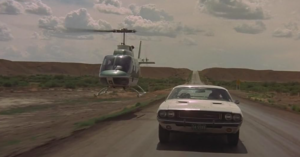
Two Super-Charged Road Movies Take the Not So Scenic Route Through America
Barry Newman as Kowalski, ‘Vanishing Point’ (1971).A high-speed chase through the desert turns him into an overnight folk hero. “Vanishing Point” (1971) The hyperkinetic, blind radio disc jockey Super Soul (Cleavon Little) is a lot like an evangelical preacher without the fire and brimstone. He’s part guardian angel, part voice of God to renegade automobile…