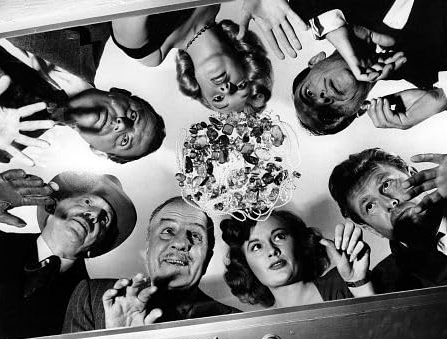
The “American Dream,” the 1940s-’50s utopian ideal of family life, is the spark plug that sets many a film noir in motion. The term “American Dream” has come to mean an attractive family, an upscale suburban home, a two-car garage and a manicured lawn — trophies required of those who wish to be at one with the Dream.
… outsiders want entry into the supposed silk-lined luxury of middle class life.
Noir exposes the rusted undercarriage of the machine that is the Dream. In noir, disenchanted outsiders want entry into the supposed silk-lined luxury of middle class life. Yet many on the inside are bitter and restless. They want out of the numbing uniformity of housing developments, luxury automobiles and backyard swimming pools. Their feelings of alienation and resentment build. Sometimes the results are tragic.
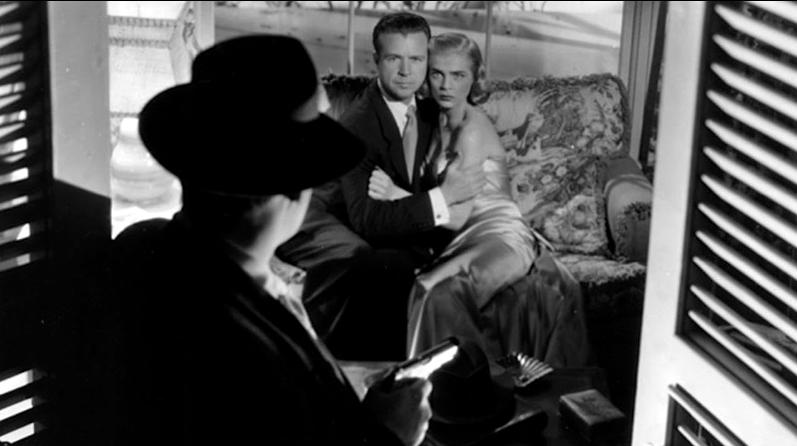
A stinging commentary on the purgatory known as suburban life, “Pitfall” (1948) introduces us to John Forbes (Dick Powell), a disenchanted insurance investigator who seems to have it all — a model suburban home, beautiful wife and a bright young son who idolizes him.
Bored to distraction with it all, his urge for excitement leads him into an affair, embezzlement and murder. For Forbes, the trappings of the supposed good life are painful reminders that post-war materialism failed to deliver any sense of personal satisfaction. The American Dream, it turned out, was but a hollow marketing slogan that left many confused and alienated, and some broken.
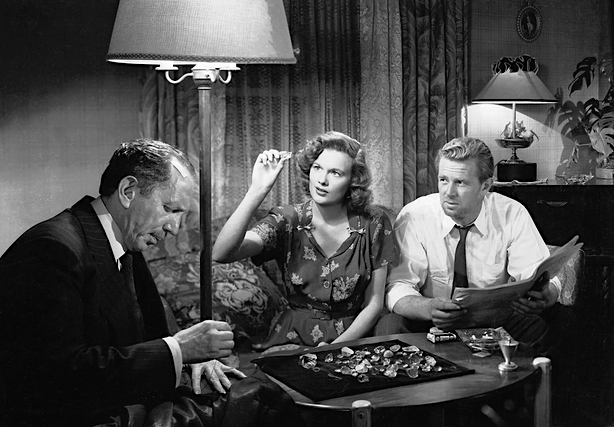
Middle-class and domestic yearnings drive “The Asphalt Jungle” (1950). On the surface, it’s about a jewelry heist, but the thieves are driven not solely by greed but by domestic and middle-class longings.
Safe-cracker Anthony Caruso (Louis Ciavelli) signs on to the caper to raise funds needed for his growing family. Rough guy Dix Handley (Sterling Hayden), another heist cohort, is obsessed with buying back his family’s horse ranch. He hopes to recapture his lost rustic, blissful childhood. Like Doc Riedenschneider, mastermind behind the job, Caruso and Handley think that one last big score will set them up for life. But criminal endeavors don’t always go as planned, nor do they reap the anticipated rewards.
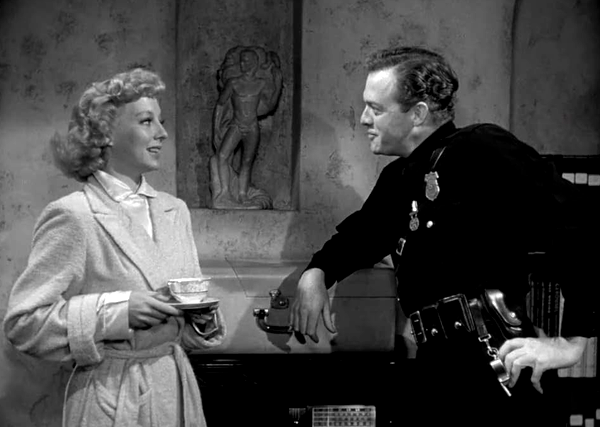
The lengths a morally compromised cop will go to in hopes of graduating to a higher income bracket is explored in “The Prowler” (1951). Jaded policeman Webb Garwood (Van Heflin) resents his lower class upbringing and current middling pay grade. Fixated on a wealthy married woman, Susan Gilvray (Evelyn Keyes), he has an affair with her and then murders her husband, hoping to lead a lush domestic life.
Middle class life as shown in Gilvray’s distant relationship with her husband presents a jaundiced view of marital bliss and secure domesticity. Garwood’s ill advised and shocking machinations, which cast doubt on the uprightness of law enforcement, seem to work. But the scaffolding holding together his big plans comes crashing down, appropriately, in a desert ghost town.
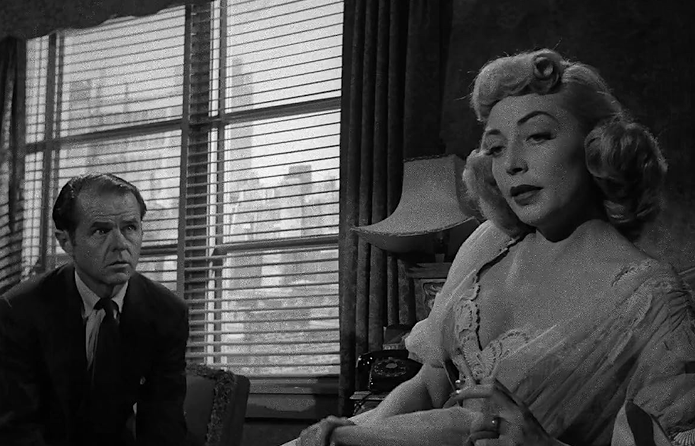
Yet another heist film, Stanley Kubrick’s “The Killing” (1956), focuses on a plan to rob a racetrack, but the lives of the stickup men are the main attraction. George Peatty (Elisha Cook Jr.), an unassuming racetrack teller, is the most tragic. His manipulative, status-fixated wife is straying and Peatty is desperate to quench her thirst for money and upward mobility.
He throws in with the band of robbers, led by career criminal Johnny Clay (Sterling Hayden), hoping that he can buy middle-class respectability and save his marriage. But his pathetic efforts unleash greater repercussions than he could have imagined.
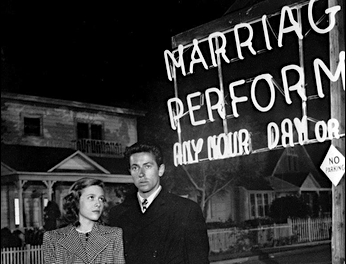
How can you find marital bliss if you’ve never had a role model to guide you? “They Live by Night” (1948) is a “lovers on the run” story about young escaped convict, Bowie (Farley Granger), who wants to leave his life of crime in the past. He and his young bride, Keechie (Cathy O’Donnell), set up housekeeping in a cabin and try to lead a normal family life.
But both were raised by criminals and know only the instability of life on the run. The undertow of societal pressures drag them down, making a peaceful domestic existence unattainable. Once branded a criminal, that indelible mark makes domesticity and security all but an impossible illusion.
The frayed fabric of a once profound ideal was tainted
The America Dream’s original meaning is the promise of freedom, independence and the right to reap the benefits from one’s own labor. After World War II, the American Dream increasingly became identified with consumer prosperity. The frayed fabric of a once profound ideal was tainted. Noir reminds us of the consequences.
Those bored insurance adjusters, overreaching jewel thieves, crooked cops, meek racetrack tellers and convicts on the run, all noir protagonists, are pursuing their vision of the American Dream. None find what they’re looking for. Instead they run into the blunt facts — the impossibility of finding happiness through status, material goods or respectability alone.
— Paul Parcellin