Noir is usually mapped onto cities — Los Angeles, New York, Chicago — places where corruption hides in plain sight. But move the genre south and something shifts. Crime doesn’t disappear; it festers. Institutions weaken, religion distorts, and violence becomes intimate rather than anonymous.
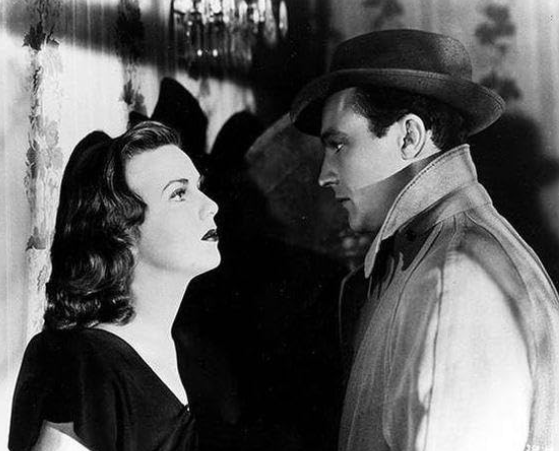
Deanna Durbin, Gene Kelly, ‘Christmas Holiday.’
Gothic Noir in Steamy Climates
‘Christmas Holiday’ (1944)
Audiences expecting a wholesome Deanna Durbin musical got sucker punched by this Southern Gothic tale, the story of a singer in a “nightclub” that’s actually a New Orleans brothel. Gene Kelly plays a murderous Southern gent with a mama complex. The film is about sexual repression, maternal control and respectability vs corruption. What makes Christmas Holiday distinctly Southern isn’t just its setting but its moral suffocation. Desire is rerouted into guilt, family becomes a trap, and violence emerges not from greed but from repression.
‘Intruder in the Dust’ (1949)
This racially charged drama about a lynching in a small Southern town sets it apart from most noirs of that era. Adapted from William Faulkner’s novel, it’s based on the true story of a white farmer killed by a black land owner. “Intruder in the Dust” expands noir beyond crime into social structure. Here, the threat isn’t a gang or a scheme but a community willing to enforce injustice collectively. Suspense comes not from what criminals might do, but from what “respectable” citizens already believe.
‘Key Largo’ (1948)
A ramshackle hotel is the setting where gangster Johnny Rocco (Edward G. Robinson) and his mob hold a group of folks hostage. Making matters worse, a hurricane is headed their way. Blustery Rocco is a stand-in for dictators and despots who rain misery upon the oppressed. As the storm approaches the tension escalates, turning this standoff into a Southern pressure cooker. In “Key Largo,” the South becomes a holding pen. Cut off by the storm, the characters are trapped in a social vacuum where power defaults to whoever is most ruthless.
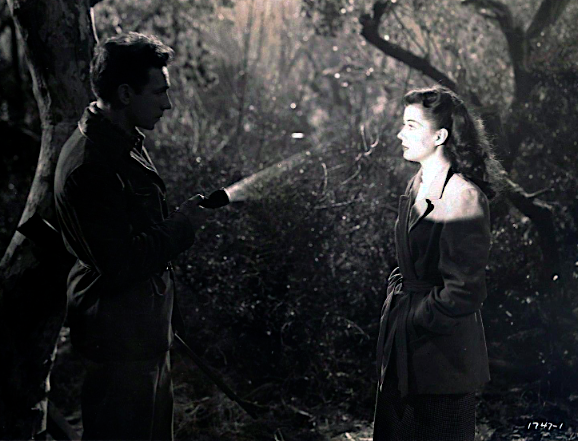
Dane Clark, Gail Russell, ‘Moonrise.’
‘Moonrise’ (1948)
The only film noir director Frank Borzage ever made, “Moonrise” features inventive camera work and a story charged with emotion. Dane Clark plays the conflicted, guilt-ridden everyman Danny Hawkins, whose father was accused of murder and hanged. “Moonrise” turns noir inward. Crime isn’t committed — it’s inherited. The protagonist’s life is shaped by a violence he didn’t commit but can’t escape, a distinctly Southern vision of fate as something passed down rather than chosen.
‘The Night of the Hunter’ (1955)
Charles Laughton’s only directorial effort bombed upon release but has since become recognized as a classic Southern Gothic noir. Self-proclaimed preacher Harry Powell (Robert Mitchum), a psychotic predator threatening the lives of two children, will stop at nothing to get his hands on a cache of stolen loot. He mesmerizes Depression-era small town folk with his sermons of fire and brimstone and keeps them in the palm of his hand. Powell isn’t just a criminal — he’s a distortion of moral authority. In Southern noir, the danger isn’t lawlessness but false righteousness.
‘Panic in the Streets’ (1950)
A pneumonic plague, brought to shore from a freighter, has infected the city and threatens to sweep the nation. Elia Kazan directs — his next film was “On the Waterfront.” Taut and suspenseful, it’s an often overlooked gem. Here, a community is threatened by an outsider, a foreigner. Officials, reluctant to talk about the imminent threat, reflect an insular culture where public relations trumps public safety.
Phenix City earned the reputation as a den of iniquity during World War II.
‘The Phenix City Story’ (1955)
A reform politician campaigning on a promise to clean up an Alabama town known as a haven for prostitution and gambling, is shot and killed. Normalized corruption flourishes in this community, where segregation reigns supreme and officials are on organized crime’s payroll. Unlike the more upscale nightclubs associated with noir, Phenix City hosts juke joints and honky-tonks where soldiers from the nearby military base congregate. Violence is always in the offing, and religious repression, institutionalized corruption and isolation creates fertile ground for vice to prosper.
‘Swamp Water’ (1941)
Georgia’s Okefenokee Swamp, home to alligators and venomous cottonmouth snakes, is where Tom Keefer (Walter Brennan) hides out after being wrongly accused of murder. Dangerous creatures of the swamp mirror the predatory townsfolk, who murder and freely perjure themselves to help convict others for their crimes.
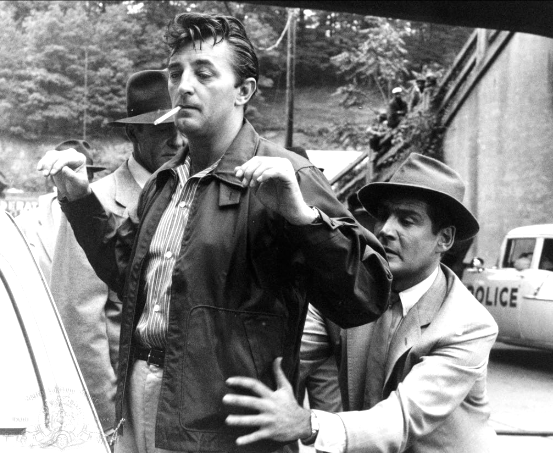
Robert Mitchum, Gene Barry, ‘Thunder Road.’
‘Thunder Road’ (1958)
Robert Mitchum plays a Korean War veteran who returns to the family moonshining business, driving shipments of hootch from his rural Tennessee home to the big city. He runs afoul of the law and racketeers who want to muscle in on his business. It’s the classic story of the rebellious, rugged individual beset on all sides by cumbersome government and organized crime. The moonshining business itself, passed down through generations, was brought about due to institutionalized religion’s drive toward temperance. Paradoxically, smaller communities relied on moonshining for their existence, creating a conflict that resulted in many violent clashes.
Southern noir replaces the anonymity of the city with something more unsettling: intimacy. Everyone knows everyone, history lingers, and violence is never abstract. It isn’t just crime — it’s inheritance.
— Paul Parcellin