Director Fritz Lang’s masterpiece of German cinema, “M” (1931), delves into the murky waters of criminality with an assuredness that few films of that era can match. A frantic search is on for a serial killer who murders children, resulting in an uptick in police raids and harassment of Berlin’s illicit enterprises. The police are frustrated in their search for the maniac, so members of the city’s underworld, eager to ward off police interference, take matters into their own hands.
The dark, brooding atmosphere of “M,” shot in glorious black and white, crossed the Atlantic with Lang when he left his native Europe and came to work in Hollywood. His vision of the shadowy underworld was destined to become part of the fabric of early- to mid-century American cinema in what was later known as film noir — French critic Nino Frank wrote an influential article in 1946 that popularized the term.
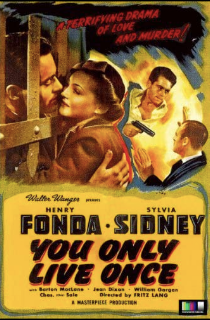
Lang made “You Only Live Once” (1937) in the United States, and it’s based loosely on the exploits of real-life bank robbers Bonnie Parker and Clyde Barrow. In it, the director translates his German Expressionist aesthetics to the American gangster film. As with all of his films, Lang infuses the story with comments on injustices the powerless must face, in this case at the hands of enforcers of the law.
In the opening scene, a prosecutor and a public defender mull over the facts of a case while a fruit peddler complains that a cop on the beat steals apples from his stall. The peddler is shooed away while bureaucrats shuffle papers and bargain over how the law will be enforced. Failing to receive help, the forlorn peddler goes comically livid as a policeman swipes another of his apples right under his nose.
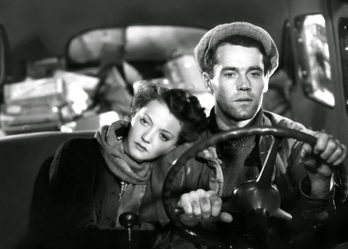
Eddie Taylor (Henry Fonda), a three-time loser, is released from prison and promptly marries his sweetheart, Joan Graham (Sylvia Sidney), who happens to be the public defender’s secretary. It was she who turns a deaf ear to the complaining fruit peddler, but as the story progresses her understanding of the justice system will change significantly.
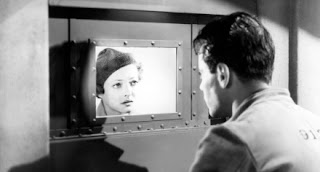 |
| Death row visit. |
Their wedding bliss is short lived, however, when the owner of the honeymoon suite spots Eddie’s mug in a true crime magazine and the couple are unceremoniously booted out.
What drives the story is Eddie’s anger over the small and not so small disparities between the way the well-connected and the downtrodden are treated. He’s the victim of foolish choices he made as a youngster, and now society and law enforcers won’t let him off the hook.
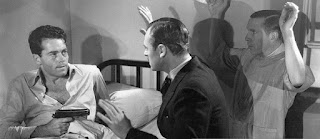 |
| Eddie makes a break for it. |
Eddie looks everywhere for another job, but has no luck. His boss turns down his appeal for a second chance, and Eddie loses his temper and slugs him. The film cuts to a cleverly shot heist scene — an armored car hold-up in a strong downpour, all beautifully filmed. A man is shot and killed and we see Eddie’s hatband, emblazoned with initials “E.T.” although we don’t see his face.
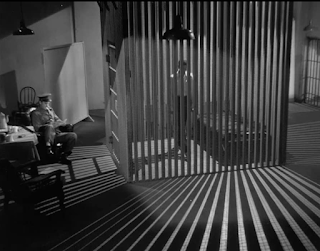 |
| Shadows in a cell block. |
In these critical scenes we see dramatic lighting effects set the mood and help illustrate the story. A shadowy expressionistic atmosphere helps dramatize Eddie’s desperation, particularly the jail cell bars casting dark shadows that slice through the frame. They’re severe, blunt, and an abstraction of the real world — the shadows could likely never be cast by the light sources we see in the frame. But they make the setting feel all the more claustrophobic while reinforcing the painful fact that Eddie is trapped in a spot from which there is no escape.
A Bold Move
Eddie tears apart a tin cup, cuts his wrist and acts erratically, hoping to be put in isolation. When he’s eventually taken there, he uses the gun to take a doctor hostage and escape.
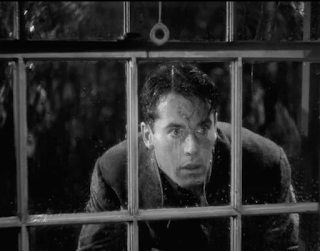 |
| Eddie Taylor on the run in ‘You Only Live Once.’ |
Joan follows Eddie to a rail yard where he’s holed up in a boxcar. He’s wounded, but they go on the run together, and as known fugitives they are blamed for every stick-up in the area.
Joan’s sister wants to send her to live in Havana, but she hits the road with Eddie instead. It’s not long before the law bears down on them and both are wounded.
Troopers pursue them on foot to the edge of the Mexican border, where freedom awaits them, but can they make it?
Eddie carries Joan, just yards from the border, and she expires in his arms. We see the pair lined up in a trooper’s telescopic sites. A blast of gunfire ends their quest for freedom.
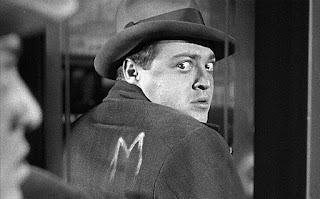 |
| Peter Lorre in “M.” |
In the early 1930s, the German Republic was beset by unemployment and hyperinflation brought about in part by the Great Depression. In this atmosphere, political extremism took root, leading to a dark period of fascist rule. We may assume that the public’s lack of faith in a just but faltering government helped pave the way for one of Germany’s darkest hours.
Both films come to tragic conclusions, but each has a distinct difference in tone and outlook. In the blunt closing scene of “M,” mothers of the young murder victims reflect that punishing the perpetrator will not bring back their children.