Warning: Spoilers Ahead
War is hell, but without it noir might never have taken root in America. The great conflict, World War II, provided a foundation on which those dark American films were built. The war precipitated the emigration to America of European film directors who brought their moody artistic visions to Hollywood. Just as important to noir’s success were the post-war anxieties that clouded the future and shaped noir’s profile.
Directors such as Fritz Lang, Billy Wilder, Robert Siodmak, Otto Preminger and Edgar G. Ulmer brought with them an affinity for the darker, shadow drenched photography of German Expressionist cinema, an aesthetic that Lang made profound use of in “M” (1931). Dark Expressionist inspired photography proved to be the ideal visual foil for American films that reflected the country’s nervous reaction to tragedies abroad and fear that they could recur here.
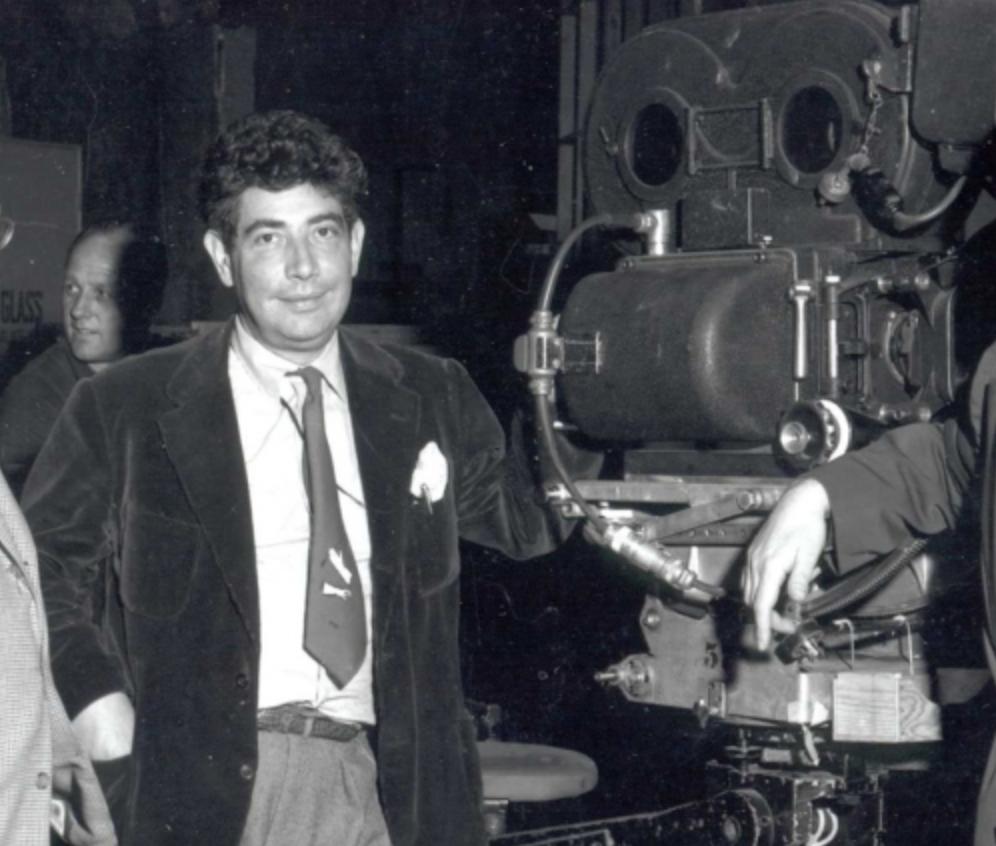
Edgar G. Ulmer — An affinity for the darker, shadow drenched photography of German Expressionist cinema.
Living under a cloud
The war’s end brought relief around the globe, yet a palpable sense of dread lingered. The world now lived in fear of imminent mass destruction made possible by new technology. The atomic bomb ended the war and introduced the age of the nuclear nightmare as the populace was left to consider the possibility of total self-annihilation.
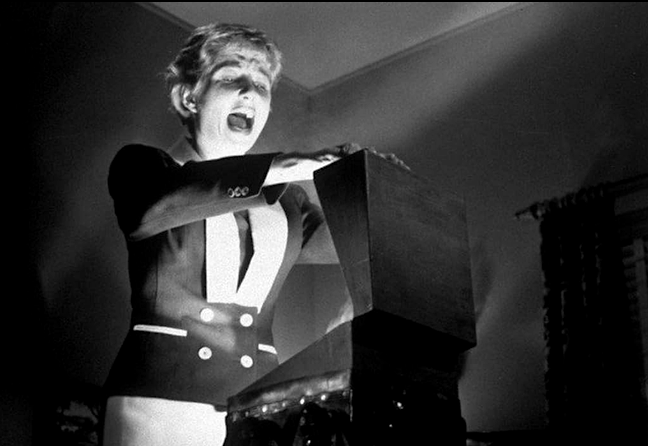
Fear of a nuclear nightmare and the possible end of civilization is best articulated in “Kiss Me Deadly” (1955), a private detective noir that, in lieu of a Maltese Falcon, is driven by a briefcase filled with hot nuclear material. The great “whatsit,” as one of the film’s characters refers to it, threatens to vaporize all living things in a blinding flash of light.
Standing in the way of nuclear annihilation is Mike Hammer (Ralph Meeker), whose reaction to the deadly briefcase is a mixture of puzzlement and determination. Unfortunately, there is no white hat who saves the day and soothes the public’s collective jitters. The film’s catastrophic ending only confirms our worst expectations.
Living in the shadow of the bomb
In “Kiss Me Deadly,” ruination is as complete as any sci-fi horror film could suggest, but unlike “Godzilla” (1954) and its ilk there is a distinct possibility that all of this could come to pass. Apart from the prospects of living in the shadow of the atomic bomb, the hard post-war realization was that winning an armed conflict did not save humanity from moral corruption or the threat of extinction. Instead, one existential crisis gave way almost immediately to another as wartime alliances dissolved into Cold War suspicion.
After World War II the focus shifted to cynicism about institutional systems. Citizens lived under a state of mutually assured destruction and built backyard bomb shelters as children were subjected to pointless A-bomb drills in the classroom. It was the age of the “military industrial complex,” as articulated by President Dwight D. Eisenhower. The developing attitude said that institutions and governmental bodies were not to be trusted.
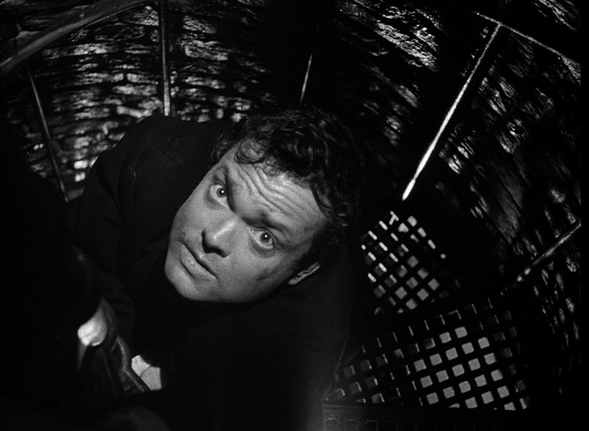
The state of permanent conflict and corruption is exemplified in “The Third Man” (1949), a noir with geo-political implications that plays out in post-war Allied-occupied Vienna. The battle-weary populace exists in a fractured society, where morals are obsolete and lives are expendable. Residents live in a perpetual state of detached paranoia. It’s here that American expatriate Harry Lime sells diluted penicillin on the black market and cares not a wit about the toll on human life his underhanded transactions cause.
In war pocked Vienna, exploitation comes from all angles and the criminal underworld is barely suppressed by Allied forces occupying various city zones. The resulting chaos was one outcome of conquest and the civilian population became relatively disposable, not unlike the victims of black market penicillin.
A pickpocket holds the key
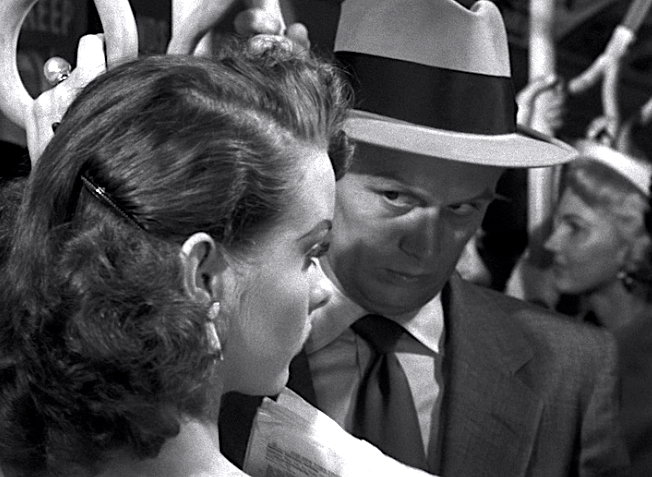
“Pickup on South Street” (1953) transports wartime anxieties to the doorstep of America’s homeland and couples them with terror over the threat of nuclear weapons. By chance, pickpocket Skip McCoy (Richard Widmark) steals a microfilm containing government secrets and he’s drawn into a cat and mouse game between federal agents and communist spies. Here, ordinary citizens become pawns within the machinations of a Cold War conflict.
Street vendor and police informant Moe Williams (Thelma Ritter) is a peripheral figure who becomes cannon fodder in the struggle to stave off the communist threat. In the battle to save the free world, civility is a luxury that cannot be afforded.
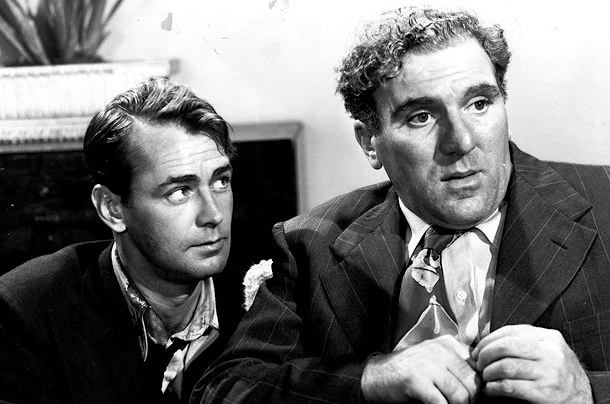
“The Blue Dahlia” (1946) debunks the myth of the returning well-adjusted veteran. Navy flyer Johnny Morrison arrives home and finds his unfaithful wife fraternizing with gangsters and all but forgetting their recently deceased child. Here, the idealized return of conquering heroes is examined under a harsh light. So is the supposedly supportive home front, which turns out to be rife with corruption, paranoia and alienation. The film is not only a rebuke of societal hypocrisies, but also of sentimentalized eyewash distributed in the media and popular culture.
The traumatized veteran takes center stage in “Act of Violence” (1948), a harrowing look at a celebrated war hero, Frank Enley (Van Heflin), and his former fellow serviceman, Joe Parkson (Robert Ryan), who wants to kill him. Guilt, vengeance and a false narrative about Enley’s wartime record all come into play in a tense standoff between Enley, a pillar of his community, and the destitute Parkson, who stalks Enley and his family. The film sets up expectations about which of them is good and which is evil, and then flips the script.
Shocking facts reemerge
The synthetic story built around the supposed hero is exposed as Parkson’s motivation for hounding his former wartime buddy comes to light. Appearances can be deceiving, and so can apparent conquering heroes. Behind hIs medals, he may be hiding a darker truth.
With its intense introspective nature concerning existential matters, noir became the defacto focal point for exploration of both societal hypocrisies and anxieties brought home from overseas battlefields. Most war movies create legends. Noir deflates false ones.
In an era of musicals, romantic comedies and westerns, post-war noir was a more raw depiction of humankind than audiences were accustomed to seeing. But only then were they ready to experience it.
— Paul Parcellin