(Warning: Spoilers Ahead)
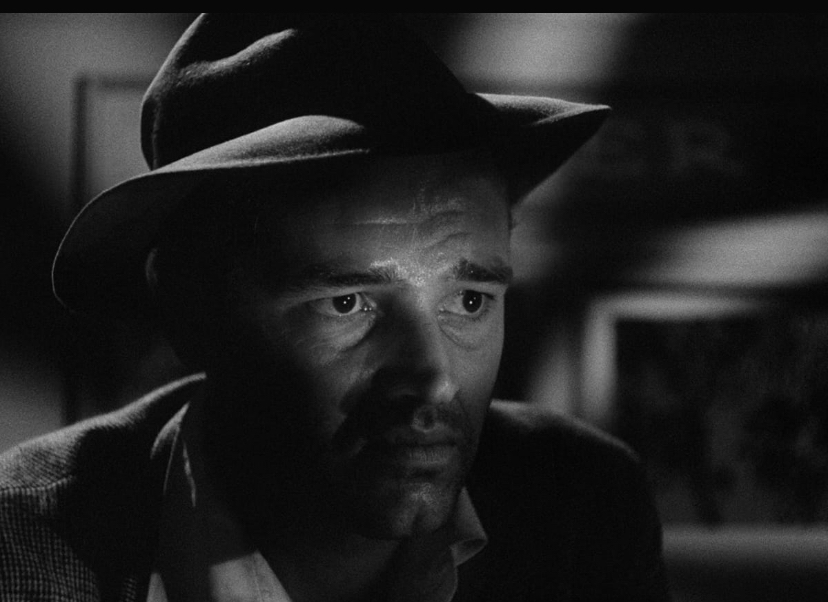
By his own account, Al Roberts, the unlucky hitchhiker in “Detour” (1945), is fated to aimlessly wander the streets of America until police catch up with him. When they do, he’ll likely hang for two murders.
It’s one of noir’s most familiar and definitive stories: an average man, through no fault of his own, is dragged into the abyss by the hands of fate. But in “Detour,” Roberts’ destiny is hardly in the stars — it’s all of his own doing.
His is one of the more intriguing cases of “denial noir.” Roberts’ story is told in his voice only, no officers of the law are on hand to interpret the facts for us and render an official version of “the truth.” Therein lies the conundrum.
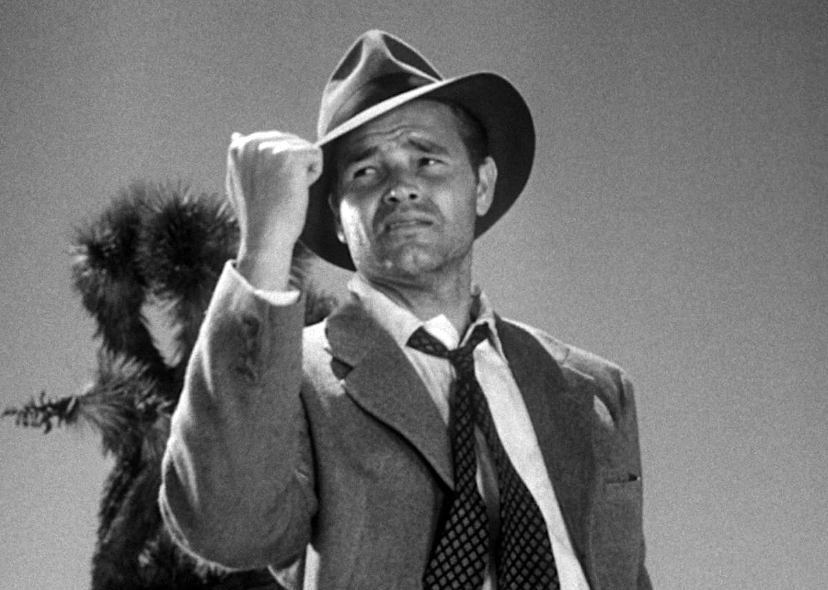
The hitchhikers of noir prey on unsuspecting motorists in remote locations.
His fall from grace brings to mind two other noir hitchhikers, Emmett Myers (William Talman) in “The Hitch-Hiker” (1953), and Steve Morgan (Lawrence Tierney) in “The Devil Thumbs a Ride” (1947). Both are unmistakably hardened criminals, terrorizing unsuspecting motorists who give them a lift.
But unlike the murderous two, Roberts is not overtly criminal but instead engages in self-deception. Director Edgar G. Ulmer is cagey in his characterization of the downtrodden antihero, who doesn’t fall into the hands of murderers but is being railroaded for crimes he didn’t commit, or so it seems.
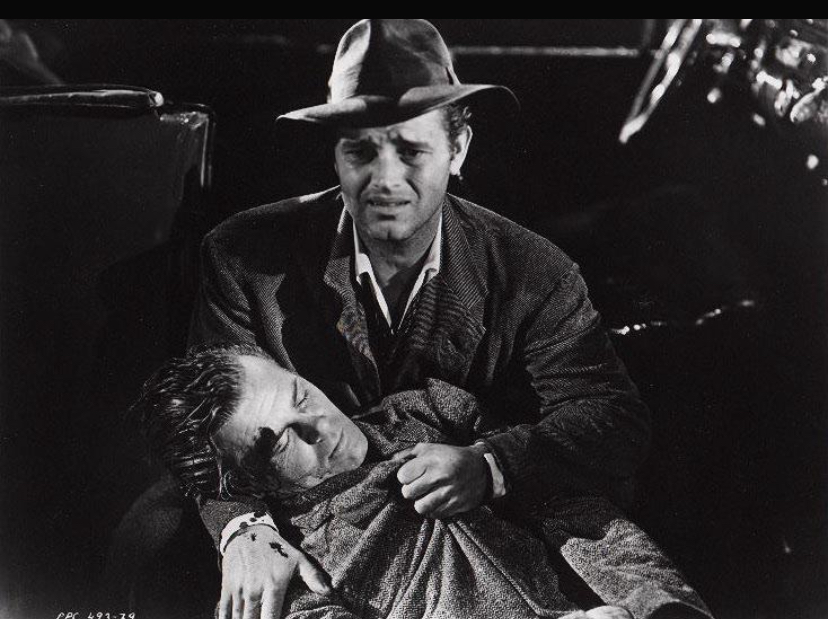
On the road for days, he hitches a ride in Arizona with a gambler, Charles Haskell (Edmund MacDonald), and an unforeseeable accident occurs, the details of which could make Roberts seem to be a cold blooded murderer. Later in his journey he meets another hitchhiker, Vera (Ann Savage), and the pair travel together until she, too, dies in a freak accident.
An accident, a telltale wound
In flashback, Roberts seems innocent of malice. According to him, Haskell died of a heart ailment and tumbled out of the car head-first onto a rock. His wound looks like blunt force trauma of the murderous variety. He switches clothes with the dead man and takes his wallet, car and driver’s license, in effect, swapping identities with the victim.
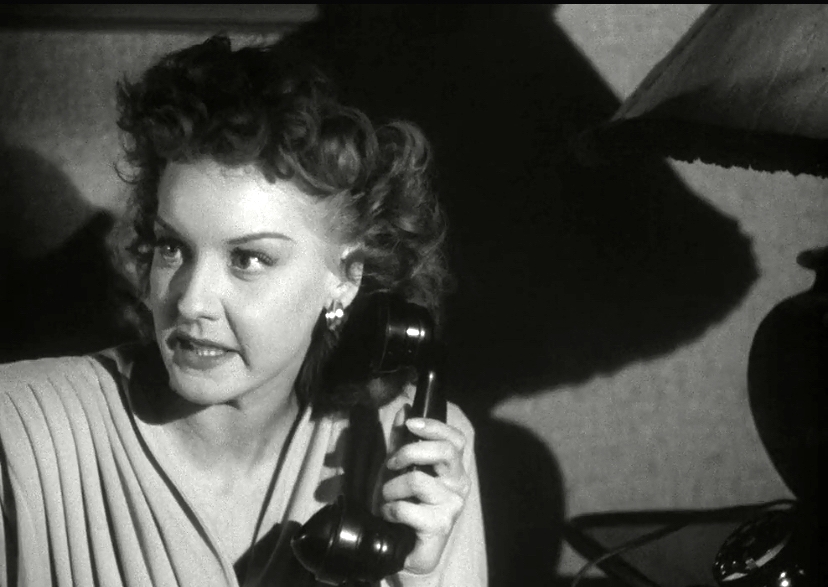
Vera’s death occurs as the two argue. She grabs the extension phone and he grips the phone’s long cord and pulls, trying to break it, and accidentally strangles her. Again, he casts himself as a victim of circumstances.
Roberts immediately assumes that he’ll be blamed for Haskell’s death, hence his erratic behavior that follows. But the prescription drugs in Haskell’s glove compartment and the medical examiners report would surely point to a heart attack.
His decision to switch clothes with Haskell, take his identification, money and car is even harder to justify. Stranger still, he makes the wardrobe swap in a driving downpour. Obviously, his thoughts and actions are unstable and damning. Yet he keeps presenting himself as a victim even when his own choices look incriminating.
An unlikely occurence
Roberts’ explanation of Vera’s death is equally difficult to accept. When the deadly phone cord incident occurs, for some unfathomable reason she wraps the cord around her own neck before dialing. Roberts yanks the cord, accidentally strangling her, or so he says.
But his alibi sounds like the flimsy invention of a terrified guilty man. As the facts pile up, it dawns on us that Roberts may not be so different from Myers and Morgan after all.
Tempting as it may be to give him the benefit of the doubt, Roberts is certainly capable of fictionalizing his own murderous activities. In denial over the crimes he’s committed, he’s hardly the pawn of fate, but is the master and author of his own demise.
— Paul Parcellin