You couldn’t call “Gun Crazy” a romance, exactly, although it’s the story of a young couple who meet cute, fall in love — and share a passion for firearms.
We meet Annie Laurie Starr (Peggy Cummins), a carnival sharpshooter dressed in a cowgirl outfit, performing in a sideshow. In the audience is Bart Tare (John Dall), who faces off with her in a shooting contest that takes on an erotic edge.
It’s lust at first sight for this all-American couple with a gun fetish and they get hitched on the spur of the moment. Together, they perform a sharpshooting act in sideshows. But Laurie wants diamonds and furs and she browbeats Bart into sticking up stores, which they do before stepping up to the big leagues.
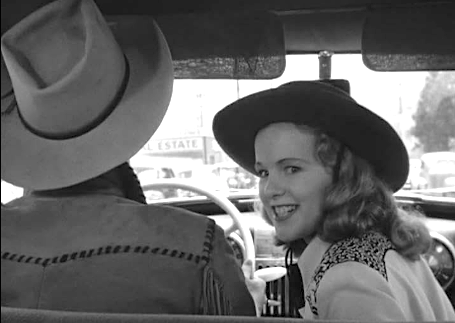
Frequently celebrated for the groundbreaking cinema it is, the Hampton robbery scene, the sharp shooting pair’s first bank stickup, resonates with a thrillingly ragged energy. Director Joseph H. Lewis shot the entire robbery sequence, more than three minutes in duration, in one long take with a camera in the back seat of the getaway car.
Realism fooled onlookers
The result is a scene that almost leaps off the screen. It feels authentic and raw due largely to its unscripted elements. As Bart and Laurie approach the bank, a car pulls out of a parking space and they pull in. This was not prearranged (if no parking space was available they planned to double park).
The patter between the two novice bank robbers, both before and after the heist, is improvised. No one, other than the bank’s staff and the police, knew that a film was being made — some on the street thought they were witnessing a real robbery.
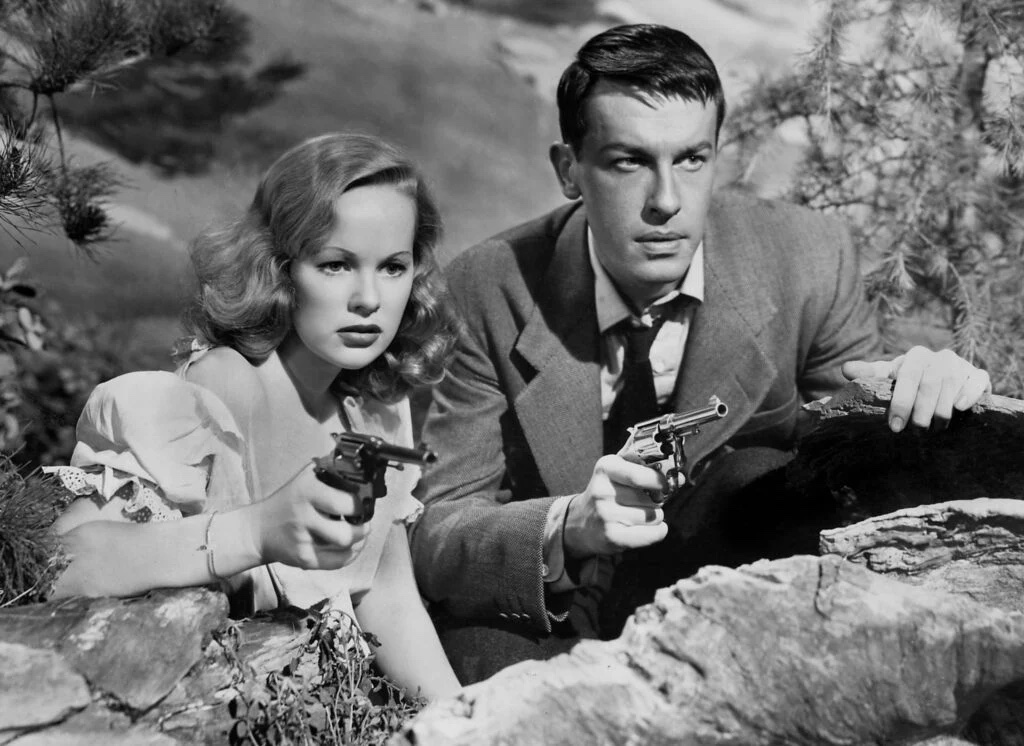
Once the robbery gets under way, Laurie waits in the car while Bart ducks into the bank. Both are clad in cowboy outfits, finally acting out the roles of real desperados that they’d only been cosplaying for carnival crowds. Myths of the American Wild West are the larcenous duo’s fantasy come to life.
Despite the buildup to the big event, we never see the heist take place. The camera stays on Laurie, who fends off a curious lawman. The idea of keeping the camera on the street and not showing the robbery is due, in part, to the film’s budget restrictions, but Lewis’s unconventional approach has a payoff.
For one dizzying moment spectators become accomplices to a crime.
As she waits, tension builds and they finally make a less than smooth exit from the stickup. With the camera stationed behind the couple the audience sees the entire scene from the back seat of the getaway car, making viewers not only spectators but virtual accomplices to the crime.
These may be the film’s most revealing moments. While the robbery takes place offscreen we’re given a chance to size up thrill-seeking Laurie and calculate her and Bart’s odds of survival. It’s a cinch that neither of them will be robbing banks for long.
— Paul Parcellin