Many American films noir of the early 1940s were anchored to big cities — Los Angeles, San Francisco, New York. So were a number of returning World War II GIs. As veterans reentered civilian life and began migrating away from urban centers to newly developing byways of suburbia, noir followed.
Away from shadowy alleyways and dark tenements, the outer boroughs provided sunshine and protection from urban crime, or at least, that was the perception. So who would guess those fleeing big cities would land in neighborhoods that were at least as treacherous as the ones they abandoned?
Claude’s contract killings finance the down payment on a suburban bungalow
In “Murder by Contract” (1958), the urge to flee the city and move to a suburban utopia motivates a hired killer, simply known as Claude (Vince Edwards), to commit vicious crimes. Claude’s contract killings finance the down payment on a suburban bungalow. He plans to blend into a community that no doubt touts its citizens’ wholesome lifestyles and a low crime rate. “Murder by Contract” suggests the notion of squeaky clean suburban neighborhoods inhabited by upright citizens is a myth. Some residents resort to more extreme measures than their neighbors could imagine to secure their spot in paradise.
Suburbia may not have replaced the city as film noir’s primary setting, but Claude’s relocation plans demonstrate that alienation and moral decay are portable. Americans carried them from downtown to the cul-de-sac.
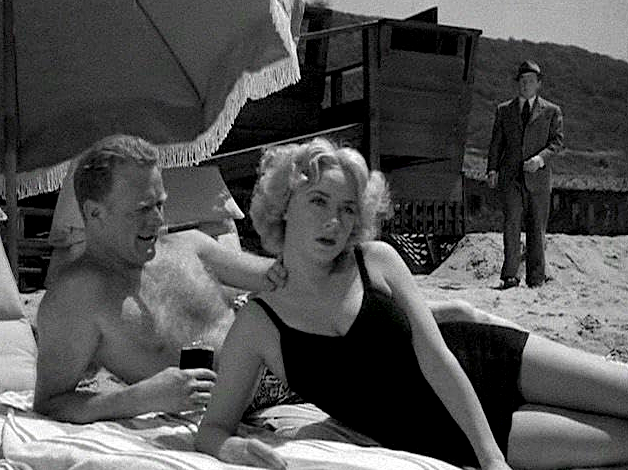
Claude, like many men in noir, lives a lonely, isolated existence in a shabby rented room. But the notion of urban isolation is flipped on its head in “Tension” (1949), which explores how women in the suburbs are locked inside sterile, fully applianced prisons. “Thirty minutes from nowhere,” Claire Quimby (Audrey Totter) groans upon first laying eyes on the flat-roof starter home her druggist husband, Warren (Richard Basehart), has purchased without consulting her. Typically, suburban husbands go off to work, leaving the wife alone and disconnected from family and friends. Marriages crumble, lives are torn apart and matrimonial friction can lead to breakdowns, and worse.
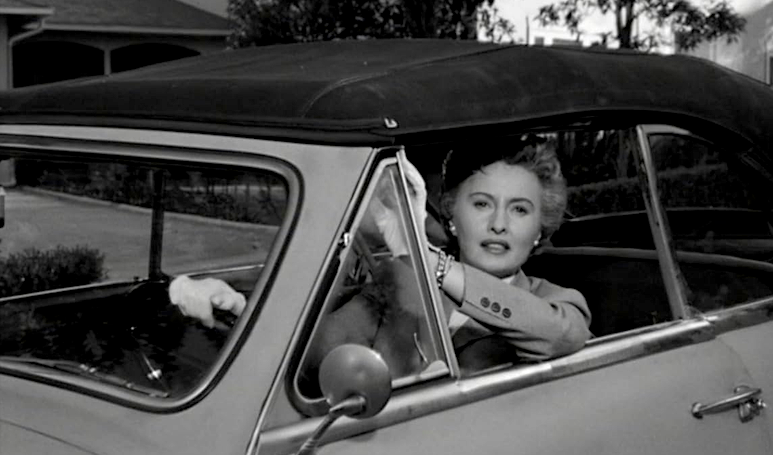
Snarky news reporter Kathy Ferguson (Barbara Stanwyck), frustrated in a male-dominated workplace, leaves her newspaper job to marry police Lieut. Bill Doyle (Sterling Hayden). Her new life in the suburbs, as depicted in “Crime of Passion” (1956), is a radical shift from the adrenaline-driven days in the newsroom. Her social life, centered among a circle of policemen’s wives, is stultifying. For Kathy, the isolated suburbs are a pressure cooker that drives an ambitious woman to commit criminal acts. The leafy enclaves may provide material comfort, but mental health issues fester there and desperate actions result in violence.
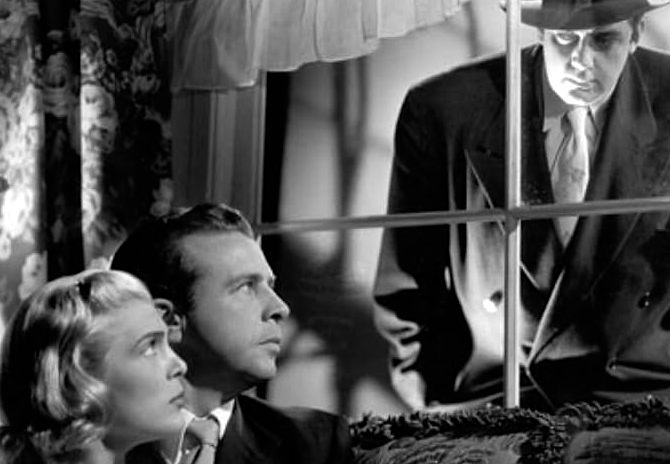
Although solitary confinement in the home is mostly the woman’s burden, the pain of isolation is twice as punishing for two people virtually imprisoned in a suburban home. Mentally ill shut-in George Z. Jones (Barry Sullivan), in “Cause for Alarm!” (1951), believes his wife, Ellen (Loretta Young), is having an affair and is planning to kill him.
Big cities allow their residents a modicum of anonymity, but small-town suburban life can leave one feeling exposed and on display. Ellen feels watched and judged by her neighbors and relatives, fueling her panic as she desperately tries to intercept a letter accusing her of murder. Hardly a model of comfort and stability, postwar developments provide cloistered quarters where doubts and suspicions curdle into full-blown paranoia.
The family man’s expectations of a blissful post-war existence outstrip the mundane reality of everyday life
While suburban isolation can drain a woman’s ambition and zest for life, men who leave their suburban sanctuaries for hum-drum office jobs find no pleasure or comradeship in work, nor satisfaction in home life. Insurance man John Forbes (Dick Powell) ought to be fulfilled by his home, loving family and solid career, but in “Pitfall” (1948) he’s depressed by the thought of being “like everybody else.” The family man’s expectations of a blissful post-war existence outstrip the mundane reality of everyday life in his sterile environment.
Facing a mid-life crisis, he meets Mona Stevens (Lizabeth Scott), from whom he’s sent to extract repayment for insurance fraud. He tries to ease his anguish by having an affair, and soon the life he built shudders on the brink of collapse. His impulsive decisions are desperate attempts to counteract his boredom and frustration, substituting lust and risky behavior for genuine personal fulfillment. Here, bedroom communities provide a fertile environment where dissatisfaction and alienation cultivate like bacteria in a petri dish.
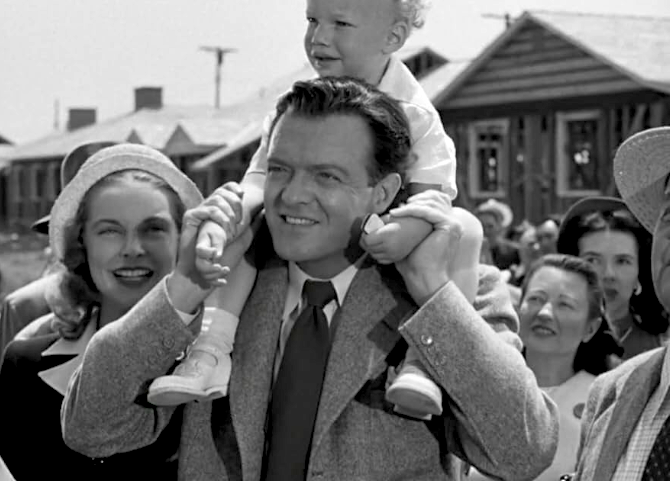
But even those who lead ostensibly happy, unfettered lives in the suburbs can run aground. Frank Enley (Van Heflin) is a model citizen and a celebrated builder in his community. The pristine surface of a sparkling clean life we see in “Act of Violence” (1949) hides a core of dry rot. A former military buddy, Joe Parkson (Robert Ryan), with whom Enley served in World War II, makes his way from his squalid rooming house in New York to Enley’s California community to stalk him and his family.
Parkson’s harassment seems to come out of the blue, but there’s a reason behind his erratic behavior. The residential enclaves of “Act of Violence” provide a welcoming environment where anyone can reinvent himself. They also offer cover, albeit temporarily, for one with a dark past. Middle class respectability, it seems, is a shiny veneer that hides morally weak characters in plain sight.
Advertised as an ideal environment for family minded couples, the suburbs of the 1940s and ’50s offered convenience and property ownership over the social interaction and cultural enrichment of urban life. They were a Utopian dream buoyed by a wobbly sense of security. At their least glamorous, the suburbs of noir are polyester upholstered prisons where isolation and alienation abound. Worse, still, crime and violence seep in through cracks in suburbia’s porous foundation. Consequently, the object of one’s most dreaded fears is apt to land on his or her own doorstep.
— Paul Parcellin